Percentages are a part of our daily lives, whether we notice them or not. From calculating discounts while shopping to checking exam scores, mastering Percentage Calculations in Daily Life helps us make smarter decisions. Knowing how to calculate percentages easily can save time, reduce confusion, and help us plan our finances better. In today’s digital age, tools like the Soula Tools Percentage Calculator make it even easier to find accurate percentages instantly, without needing a calculator or complicated formulas.
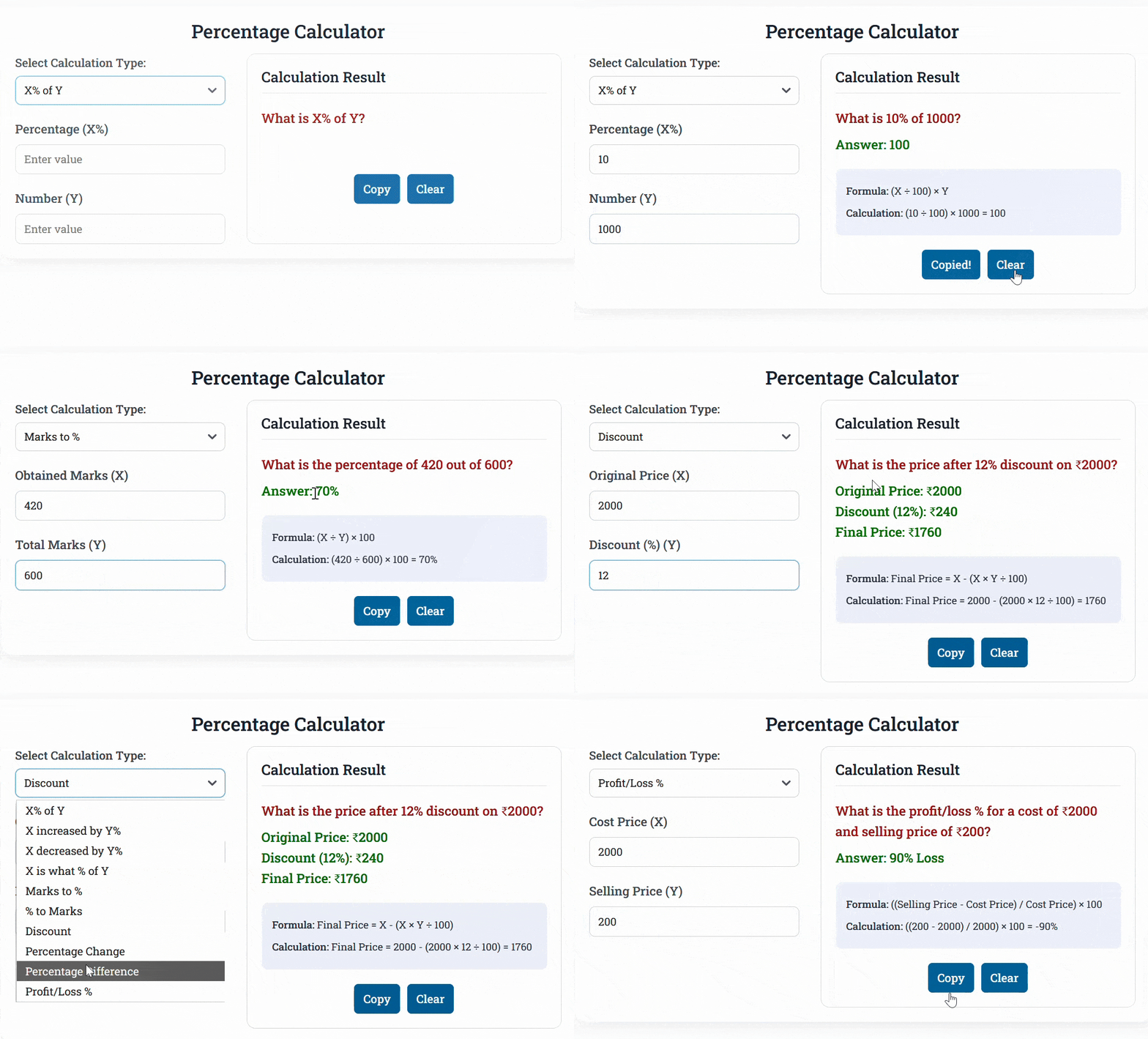
In this article, we’ll explore how percentages are used in everyday life, why understanding them is important, and how to calculate them easily. You’ll learn real-life examples, tips, and tricks to handle percentages confidently — whether it’s for schoolwork, budgeting, or business planning.
What Is a Percentage?
The word “percentage” comes from the Latin phrase “per centum,” meaning “by the hundred.” It represents a number or ratio expressed as a fraction of 100. In simple terms, it’s a way of expressing “how much out of 100.”
For example:
- 50% means 50 out of 100, or half of something.
- 25% means 25 out of 100, or one-fourth of something.
- 100% means the whole or full amount.
Percentages are a universal way of expressing proportions — they help us compare different things easily, no matter what the total value is.
How to Calculate a Percentage
Calculating percentages is simpler than it seems. The basic formula is:
Percentage = (Part ÷ Whole) × 100
For example, if a student scores 45 marks out of 60 in a test, then:
(45 ÷ 60) × 100 = 75%
This means the student got 75% marks.
Reverse Calculation
Sometimes you need to find the original number or the part from a given percentage. For example:
- Finding the part: (Percentage × Total) ÷ 100
- Finding the total: (Part × 100) ÷ Percentage
For example, if 25% of a number is 80, then the total number = (80 × 100) ÷ 25 = 320.
Why Are Percentage Calculations in Daily Life Important?
Percentages simplify complex numbers and make comparisons easier. They help us express proportions, measure growth, and evaluate results. Whether you’re managing your money or monitoring performance, understanding percentages gives you better control and clarity.
Let’s explore some real-life situations where percentage calculations play a big role.
1. Shopping Discounts and Offers
Understanding Sale Percentages
When you see a board that says “50% off,” it means you’re paying half the original price. If a shirt costs ₹1,000, then 50% off means a discount of ₹500 — so you pay ₹500.
Why It Matters
- Helps you quickly know whether an offer is genuine.
- Prevents overspending on fake “big discounts.”
- Enables smart decision-making during sales seasons.
Quick Example
If something is 30% off on ₹2,000, discount = (30 × 2000) ÷ 100 = ₹600. Final price = ₹1,400.

2. Calculating Taxes and GST
Percentages in Bills
In India, GST (Goods and Services Tax) is applied as a percentage of the product price. For instance, if the GST rate is 18%, and the product costs ₹1,000, then GST amount = (18 × 1000) ÷ 100 = ₹180.
For quick and accurate calculations, you can use a dedicated GST calculator to find the final price with or without tax.
Why It’s Useful
- Helps you verify if shopkeepers charge correct GST.
- Useful for businesses when filing returns.
- Ensures transparency in billing and expenses.

3. Salary Increments and Deductions
Understand Growth and Reductions
Salary changes are often given in percentages. For example, a 10% increment on ₹30,000 means an increase of ₹3,000, making the new salary ₹33,000.
Similarly:
- A 5% deduction means ₹1,500 less, resulting in ₹28,500.
- Bonus or hike percentages reflect career growth.

4. Loan Interest and EMIs
Percentages in Banking
Banks calculate interest rates as percentages. Whether it’s a home loan, car loan, or personal loan, the rate determines how much extra you’ll pay over time. Using a loan calculator can help you estimate your monthly payments and total interest costs.
Example
If you borrow ₹1,00,000 at 10% annual interest, you’ll pay ₹10,000 as interest per year.
Benefits of Knowing This
- Helps you compare loan offers.
- Allows smarter financial planning.
- Prevents paying hidden charges unknowingly.
5. Exam Marks and Academic Scores
Calculating Results
Every student uses percentages to understand performance. If you score 360 out of 500, then your percentage is (360 ÷ 500) × 100 = 72%.
Why It’s Helpful
- Helps track academic progress.
- Important for applying to higher studies or jobs.
- Allows fair comparison between different exams or subjects.

6. Business Profits and Losses
Measure Performance
Business growth and profitability are often expressed in percentages. For instance, if you invest ₹50,000 and earn ₹60,000, your profit percentage is:
((60,000 – 50,000) ÷ 50,000) × 100 = 20%
Why It Matters
- Shows success or failure clearly.
- Helps investors evaluate performance.
- Aids in goal setting and decision making.

7. Savings and Budget Planning
Track Your Finances
Percentage-based tracking helps you manage income and expenses better. You can plan to save a fixed percentage of your monthly earnings — for example, 20% savings from every salary.
Advantages
- Creates financial discipline.
- Helps balance spending vs saving.
- Enables smarter investment decisions.
8. Fitness and Health Tracking
Percentages in Body Metrics
Health statistics often use percentages, such as body fat percentage, hydration levels, or weight-loss progress.
Examples
- Lost 5% body weight = good sign of progress.
- Body fat reduced from 30% to 25% = improvement.
Why It’s Important
Percentages make health data easy to understand and compare over time.
9. Investment Returns
Measure Growth with Percentages
When you invest money, returns are expressed as a percentage. For example, if you invest ₹10,000 and after a year you have ₹11,000, your return rate is ((11,000 − 10,000) ÷ 10,000) × 100 = 10%.
Why Investors Use Percentages
- Allows comparison of different investment options.
- Shows growth or loss clearly.
- Helps in long-term financial planning.
10. Understanding Inflation and Price Hikes
Percentages in Economy
Inflation represents how much prices have increased over time. For example, if last year’s petrol price was ₹100 per litre and now it’s ₹110, inflation rate = ((110 − 100) ÷ 100) × 100 = 10%.
Why It Matters
- Helps understand cost of living changes.
- Useful for salary negotiations or budgeting.
- Shows the real impact of economic trends.

11. Population Growth and Demographics
Government data often use percentages to express changes in population, literacy rate, or employment. For instance, if literacy rose from 65% to 72%, it means a 7% improvement — easy to grasp and communicate.
12. Sports Statistics
Performance Measurement
In sports, percentages help measure accuracy or performance. For example:
- Cricket: Strike rate = (Runs ÷ Balls) × 100.
- Football: Pass accuracy = (Successful passes ÷ Total passes) × 100.
- Basketball: Shooting accuracy = (Shots made ÷ Total shots) × 100.
Why Useful
Fans and analysts easily understand a player’s consistency and performance through percentage stats.
13. Cooking and Recipes
Even cooking uses percentages! Chefs adjust ingredients based on proportion. For example, if a recipe says “sugar 20% of flour weight,” and you have 500g flour, sugar = (20 × 500) ÷ 100 = 100g.
Understanding this ensures your recipe’s balance remains perfect even when you scale up or down.

14. Data and Reports
Reports, analytics, and surveys use percentages to present data clearly. For example, saying “75% of users prefer dark mode” is easier to understand than “300 out of 400 users.”
Percentages simplify data presentation and make it visually meaningful in charts, graphs, and dashboards.
15. Everyday Comparisons and Decisions
Percentages help in countless small ways daily — calculating phone battery, data usage, exam results, or even feedback ratings. They simplify complex numbers into understandable insights.
Understanding how to calculate and interpret percentages builds confidence and helps make informed decisions.
Advantages of Using Online Percentage Calculators
While manual calculations are useful, online tools make it faster and more accurate. The Soula Tools Percentage Calculator can instantly calculate increases, decreases, or reverse percentages without errors. It works directly in your browser, keeps your data private, and supports all common percentage calculations — perfect for students, business owners, and professionals.
Conclusion
Percentages are everywhere — from financial planning and education to sports and health. They simplify life by helping us compare, calculate, and understand numbers better. Once you understand how they work, you’ll start seeing percentages in almost every decision you make. And with easy tools like the Soula Tools Percentage Calculator, you can handle any percentage-related task quickly and accurately. Understanding percentages isn’t just math — it’s a life skill that improves clarity, confidence, and decision-making in everyday situations.